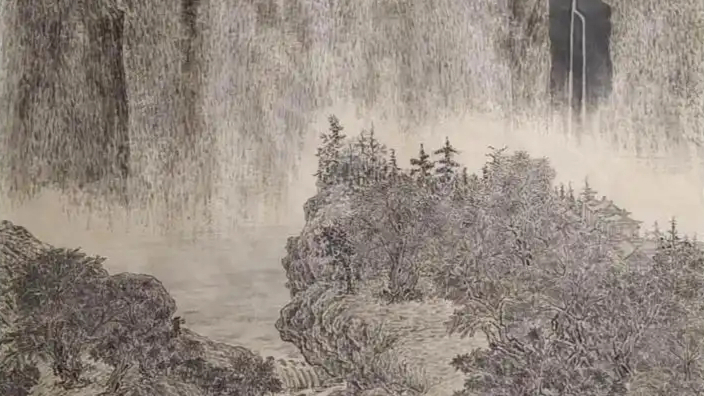
Travelers Among Mountains and Streams
Introduction
Travelers Among Mountains and Streams, an iconic masterpiece by Fan Kuan, stands as a quintessential example of Northern Song Dynasty landscape painting. This celebrated artwork captures the majestic grandeur of nature, illustrating the philosophical beliefs of coexistence between humans and the natural world. Fan Kuan, a preeminent figure of the Northern Landscape Painting School, is renowned for his portrayal of craggy and monumental mountains, contrasting with the more fluid lines of the Southern School. This painting remains one of the most acclaimed works in Chinese art, lauded for its technical brilliance and profound thematic depth, reflecting both aesthetic beauty and philosophical contemplation.
Historical Background
The Song Dynasty (960-1279) was a period marked by significant developments in art and literature, with landscape painting gaining prominence as a major artistic genre. During this era, artists sought to capture the natural world not merely as it appeared, but as a reflection of deeper philosophical and spiritual insights. The Northern Song Dynasty, in particular, was characterized by its focus on naturalism and the depiction of monumental landscapes. Fan Kuan emerged as a leading figure within this context, renowned for his ability to convey both the physical reality and the metaphysical essence of nature through his art. Travelers Among Mountains and Streams, created in the early 11th century, exemplifies the ideals of this period, embodying a synthesis of technical prowess and philosophical insight.
Artist: Fan Kuan
Fan Kuan (950-1032) was a prominent painter of the Northern Song Dynasty, celebrated for his contributions to the landscape painting genre. His work is characterized by a meticulous attention to detail and a profound understanding of nature's forms. Initially influenced by the works of Jing Hao and Li Cheng, Fan Kuan eventually turned to nature itself as his primary teacher, spending years in the mountains of Huayuan, Shanxi, to perfect his craft. His dedication to capturing the essence of the natural world is evident in his bold brushwork and the dynamic compositions of his paintings. Fan Kuan's holistic approach to art, where he viewed painting as an expression of the artist's mind and heart, allowed him to convey profound philosophical insights through his depiction of nature.
Composition and Style
Structure and Layout
Travelers Among Mountains and Streams is a hanging scroll measuring 2.06 meters in height, which unfolds to reveal an intricate composition divided into three distinct planes: far, middle, and near. This classic Chinese perspective invites viewers to explore the painting from multiple vantage points, creating a sense of depth and scale. The towering mountains dominate the composition, conveying a sense of majesty and permanence. A slender waterfall cascades down the mountains, adding a dynamic element to the serene landscape. Below, the painting depicts gentle slopes, rivers, and lush trees, punctuated by the presence of travelers and merchants. This arrangement not only illustrates the beauty of nature but also embodies the philosophical notion of humanity's small place within the vast cosmos.
Techniques and Materials
Fan Kuan's mastery of brushwork is evident in the meticulous details and varied textures of Travelers Among Mountains and Streams. He employed a technique known as wrinkle texture strokes to render the jagged outlines of rocks and mountains, creating a sense of solidity and permanence. The use of ink and silk as the primary materials lends the painting a delicate yet enduring quality. The subtle gradations of ink wash, combined with bold, decisive brushstrokes, contribute to the painting's dynamic composition and the lifelike depiction of natural forms. These techniques not only showcase Fan Kuan's technical skill but also his ability to convey the spiritual and philosophical dimensions of the landscape.
Interpretation and Meaning
Symbolism
Travelers Among Mountains and Streams is imbued with rich symbolism, reflecting both the natural world and deeper philosophical concepts. The imposing mountains serve as a metaphor for the eternal and unchanging aspects of nature, while the diminutive human figures symbolize the transience of human life. This juxtaposition highlights the Taoist belief in the interconnectedness of all things, emphasizing the harmony between humanity and the natural world. The painting's composition, with its vast, sweeping landscapes and minute human presence, invites contemplation of the individual's place within the universe, encouraging viewers to reflect on the balance between nature and civilization.
Influence of Taoism
Taoism, a philosophical and religious tradition emphasizing harmony with the natural world, profoundly influenced Fan Kuan's approach to landscape painting. This influence is evident in the themes and composition of Travelers Among Mountains and Streams. Fan Kuan's depiction of vast, unspoiled landscapes reflects the Taoist ideal of returning to nature and living in accordance with its rhythms. The painting invites viewers to experience a sense of tranquility and oneness with the environment, encouraging them to embrace a Taoist perspective of humility and reverence for the natural world. Through his art, Fan Kuan conveys the Taoist principles of simplicity, naturalness, and the interconnectedness of all things.
Influence and Legacy
Travelers Among Mountains and Streams has had a lasting impact on Chinese landscape painting and art history. As a masterpiece of the Northern Song Dynasty, it set a standard for the depiction of landscapes, influencing generations of artists who sought to capture the majesty and spirit of nature in their work. Fan Kuan's innovative techniques and philosophical approach to painting left an indelible mark on the development of Chinese art, inspiring subsequent movements and schools, including the Southern School of Landscape Painting. The painting's enduring legacy is a testament to its artistic and intellectual richness, serving as a source of inspiration and a symbol of the timeless connection between humanity and the natural world.








